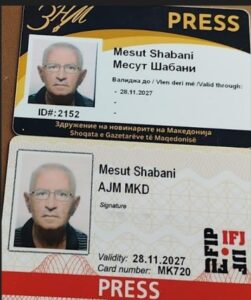

Dear Mesut Shabani,
Thank you for your email and the policy briefing provided. As your message did not include specific references to the public sources mentioned, our response is based strictly on the questions and context provided in your briefing.
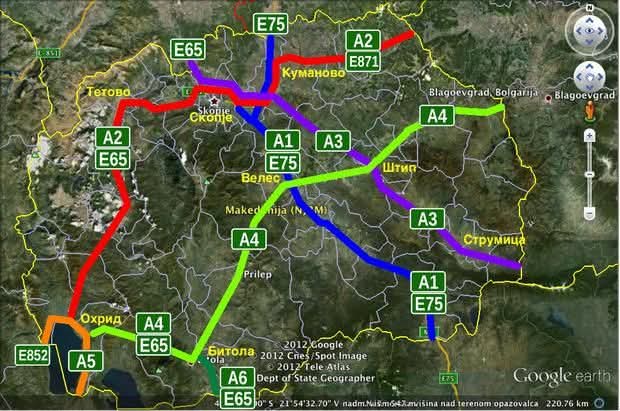
We understand your inquiry refers to the road sections of Corridor VIII, which is an integral part of the Western Balkans–Eastern Mediterranean (WBEM) European Transport Corridor, as established by Regulation (EU) 2024/1679.
It is important to clarify that under the new Regulation, Corridor VIII is no longer treated as a standalone TEN-T corridor. Instead, it is fully embedded within the WBEM European Transport Corridor. These corridors are approved through the EU legislative process and are directly anchored in the Regulation.
Regarding the road alignment mentioned in your briefing – Struga – Kičevo – Gostivar – Tetovo – Skopje – we can confirm that this is exactly as stated in the legal basis provided by the TEN-T Regulation.
The Directorate-General for Mobility and Transport of the European Commission (DG MOVE) fully supports the strategic importance of Corridor VIII. It represents a vital opportunity for economic integration, enhanced connectivity, and regional development across Southeast Europe. By strengthening East-West transport links, this project contributes significantly to the modernization of infrastructure throughout the Western Balkans. We agree that, given its strategic nature, maintaining transparency regarding planning decisions is essential.
Please find below our responses to the key questions raised in your briefing:
1. Have international heritage organizations formally requested the rerouting of the corridor in this segment? DG MOVE has not received any formal requests from international heritage organizations regarding the rerouting of this specific segment.
2. Were alternative engineering solutions (e.g., tunnels or viaducts) evaluated as part of the planning process? DG MOVE is not aware of such specific evaluations at this level. We recommend contacting the respective national governments, as they are responsible for the detailed engineering and planning of these sections.
3. Has a comparative feasibility study been conducted between the original route and the proposed alternative alignment? DG MOVE is not in possession of, nor aware of, such a comparative feasibility study. Again, the national authorities of the countries concerned would be the most appropriate source for this information.
4. Have European institutions and international financial partners been formally consulted regarding a potential deviation of the corridor? DG MOVE has not been formally consulted regarding any potential deviation from the alignment established in the Regulation.
5. What would be the financial and economic implications of such a change for the overall project? In light of the answers provided above, it is not possible to provide an assessment of any financial or economic implications at this time.
We believe this information clarifies the DG Move position and the current legal framework governing the corridor.
Best regards,
DG MOVE
European Commission
__—————————;;——————
Mesut Shabani- Tetovë anëtarë i shoqatës ndërkombëtare të Gazetarëve IFJ me seli në Bruksel